

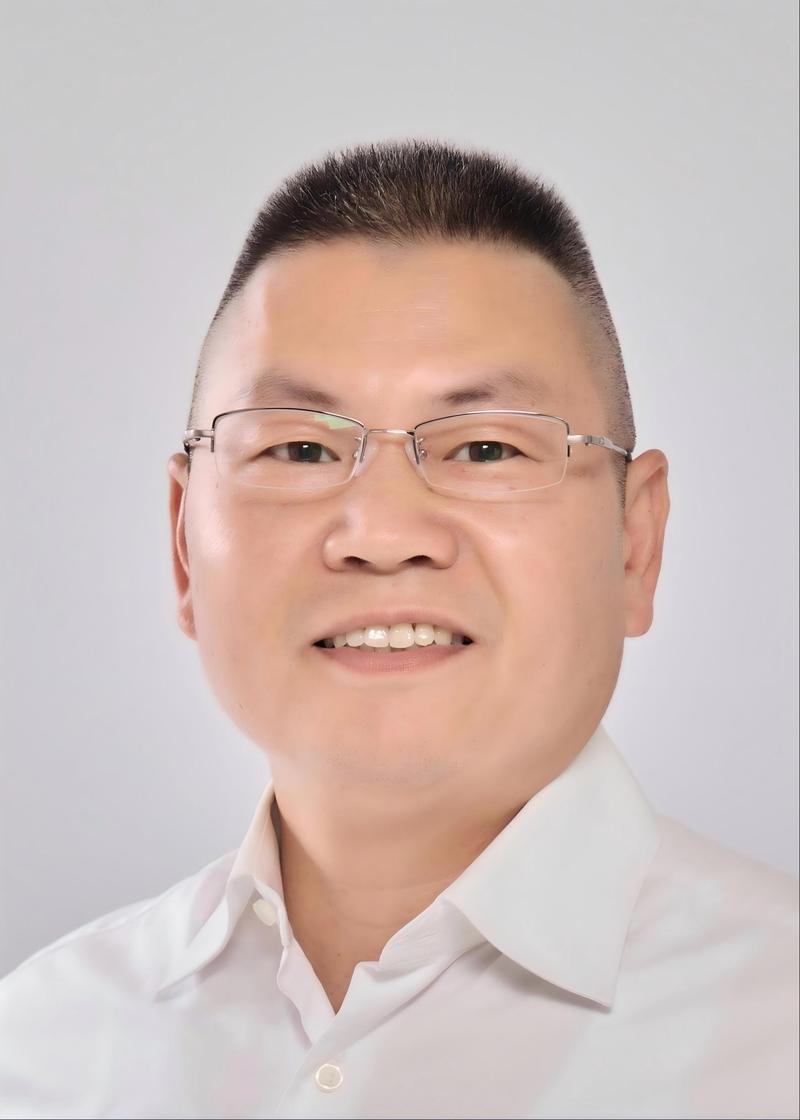
 赵拥军 博士
研究员、博士生导师
复旦大学航空航天系
通讯地址:上海市杨浦区邯郸路220号光华楼东主楼2508室
电子邮箱:zhaoyj@fudan.edu.cn
教育经历:
· 1997年7月,北京航空航天大学,获航空发动机学士学位。
· 2000年3月,北京航空航天大学,获航空宇航推进理论与工程硕士学位。
· 2005年5月,佐治亚理工学院(Georgia Institute of Technology),获航空工程博士学位。
工作经历:
· 2005年6月 - 2020年2月,通用电气公司(GE Company)。
· 2020年3月 - 至今,复旦大学。
主要研究领域及招生方向:
· 航空发动机及燃气轮机总体性能建模与仿真
· 航空发动机及燃气轮机健康管理与智能运维
· 新型混合动力系统设计与优化
· 智能发动机
主持的代表性科研项目:
· 航空发动机及燃气轮机系统仿真与优化体系集成研究
· 航空发动机热力性能衰退与气路故障诊断技术研究
· 基于图像文本对比学习的航空发动机典型缺陷智能检测技术研究
· 基于数据驱动的航空发动机宽工况多部件复杂耦合气路故障诊断研究
· 发动机总体性能领域大语言模型研究
· 重型燃气轮机压气机试验数据采集与分析系统
· 超大范围变海拔动力系统性能自适应修正及耦合分析技术研究
· 低空运载器能源动力系统状态评估与智能管理等
主要学术任职:
· 科技部评审专家
· 教育部评审专家
· 上海市科学技术奖会评专家
· 上海市航空学会空气动力学专业委员会委员
· 上海市航空学会航空机械工程专业委员会委员
· 上海市航空学会技术经济专业委员会委员
· 上海市航空发动机数字孪生重点实验室外部专家等
代表性学术论文:
1. Data-Model Fusion Framework for Aero-Engine Degradation Diagnosis under Measurement Underdetermined Conditions[J]. ASME Journal of Engineering for Gas Turbines and Power,2026
2. Comprehensive optimization of PEMFC hybrid propulsion systems for regional aircraft: Design, sizing, and operational strategy[J]. Applied Energy, 2026
3. A deep adversarial domain adaptation framework based on state space model for Remaining Useful Life prediction[J]. Measurement Science and Technology, 2026, Volume 37,136203
4. An Energy-Aware Autonomous Trajectory Planning Method for Unmanned Electric Vertical Takeoff and Landing Aircraft[J]. Drones, 2026
5. Feature alignment and spatio-temporal domain adaptive strategy for aeroengine virtual sensor model construction under domain shifts[J]. Measurement, 2026,Volume 260, 119744
6. A Data-Driven Approach for Reliability Assessment and Remaining Life Prediction of Aero-Engines Based on a Time-Transformed Bivariate Wiener Process and Copula Dependency Structure[J]. Aerospace Science and Technology, 2026,Volume 168, 111257
7. Online Adaptive Transfer Learning for Aeroengine on-board Gas Path Modeling Under Domain Shifts [J]. Measurement,2025,Volume 253, 117834
8. 基于推力反馈的变循环发动机多目标协同控制研究[J].推进技术,2026,47 (03) : 262-273
9. Thermodynamic performance and decoupling characteristics analysis of a dual-shaft hybrid propulsion system integrated solid oxide fuel cell for commercial aircraft [J]. Applied Energy,2025,125855
10. Aeroengine intelligent gas path simulation and diagnosis based on feature fusion and meta learning[J]. Measurement Science and Technology, 2025, Volume 36(5): 056119
11. Comprehensive Thermodynamic Performance Evaluation of a Novel Dual-Shaft Solid Oxide Fuel Cell Hybrid Propulsion System[J]. Aerospace, 2025, 12(1):59
12. Transient gas path fault diagnosis of aero engine based on domain adaptive offline reinforcement learning[J], Aerospace Science and Technology, 2024,Volume 155, Part 3,109701
13. A novel method for aero-engine map calibration using adaptation factor surface[J], Measurement, 2024,Volume 239,115394
14. A novel approach to aeroengine performance diagnosis based on physical model coupling data-driven using low-rank multimodal fusion method[J], Journal of the Global Power and Propulsion Society, 2024, 8:334–348
15. A Novel Performance Adaptation Method For Aero-Engine Matching Using Adaptation Factor Surface[J]. Journal of the Global Power and Propulsion Society, 2024, 8: 154–165
16. 基于自适应因子曲面的航空发动机过渡态性能自适应方法[J], 复旦学报(自然科学版),2024,Vol.63 No.6
17. A Novel Performance Adaptation Method For Aero-Engine Matching Using Adaptation Factor Surface[C], Proceedings of Global Power and Propulsion Society, Hongkong, 2023,10
18. A novel approach to aeroengine performance diagnosis based on physical model coupling data-driven using low-rank multimodal fusion method[C], Proceedings of Global Power and Propulsion Society, Hongkong, 2023,10
19. A Novel Digital Twin Framework for Aeroengine Performance Diagnosis[J]. Aerospace, 2023,10(9), 789
20. Data-Driven Exhaust Gas Temperature Baseline Predictions for Aeroengine Based on Machine Learning Algorithms[J]. Aerospace, 2023, 10(1), 17
教师寄语:
本课题组围绕“航空发动机及燃气轮机”国家重大科技专项及新构型空天动力系统等战略需求,系统布局航空发动机、燃气轮机、新型空天动力系统等关键应用场景。打通学术研究与工程应用之间的壁垒,充分发挥复旦大学在数理基础、大数据科学与人工智能方面的特色优势,推动智能科学与系统科学的前沿深度融合,攻克空天动力装备系统设计与优化、健康管理、智能发动机、新型混合动力等核心领域的关键科学及工程技术难题。
本课题组注重学科交叉融合,欢迎具有航空航天、能源与动力、工程热物理、大数据与人工智能、自动化与控制、信息与计算机科学、力学、机械等专业背景的同学加入本组,攻读硕士、博士学位,欢迎博士后加盟!
